

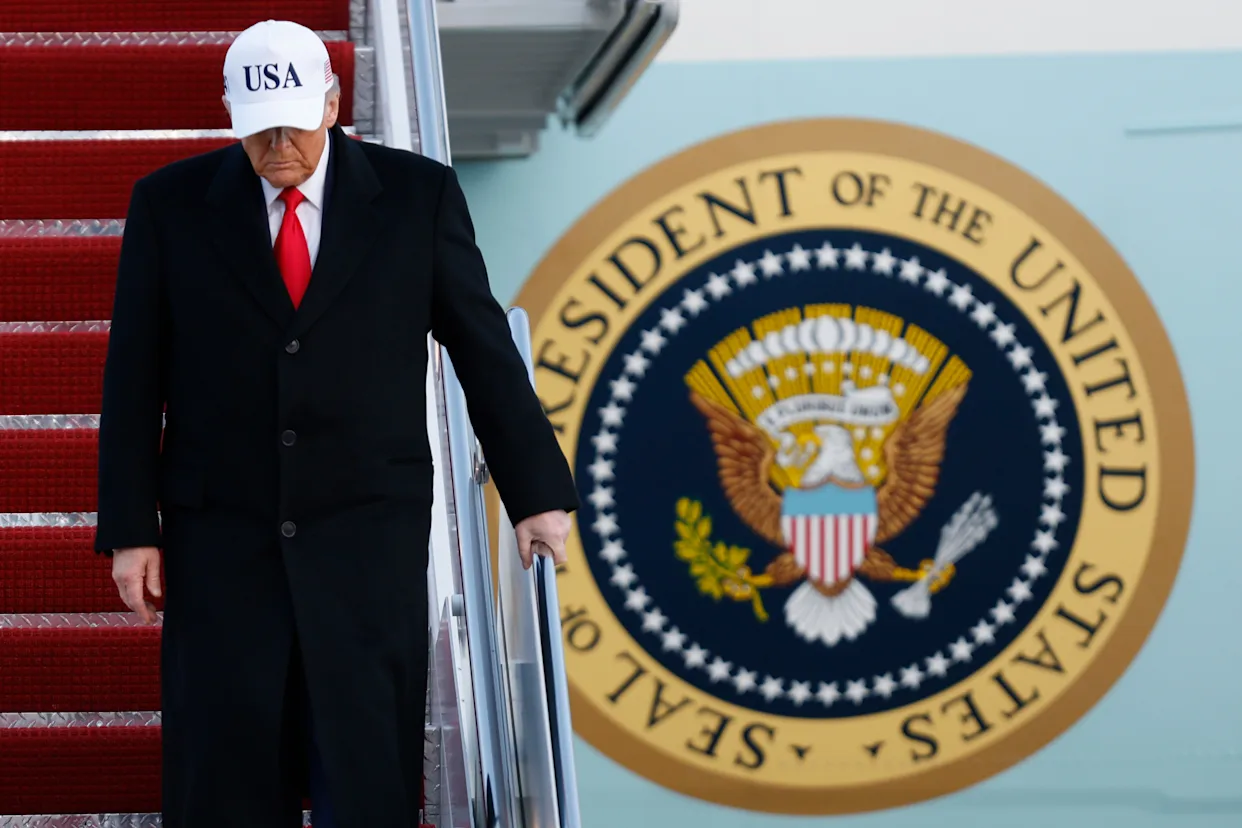
On January 15, 2026, the United States Senate floor became the stage for a dramatic constitutional showdown. In a razor-thin vote that fell strictly along party lines, the chamber blocked a bipartisan resolution intended to limit President Donald Trump’s authority to conduct further military operations against Venezuela without explicit congressional approval.
The final tally was 51-50, with Vice President J.D. Vance casting the tie-breaking vote to kill the measure. This outcome marked a significant victory for the Trump administration, affirming executive discretion in foreign military engagements. However, for constitutional scholars and lawmakers concerned about the erosion of checks and balances, the vote signaled a worrying precedent regarding who holds the ultimate power to wage war.
The resolution wasn’t merely a procedural gesture. It was a direct response to a sudden and aggressive U.S. military operation in Caracas that resulted in the capture of Venezuelan President Nicolás Maduro. While the operation was tactically successful, it raised immediate questions about the scope of presidential authority. Did the executive branch overstep its bounds by initiating a conflict without consulting the legislative branch?
The Senate’s decision to block the resolution suggests a shifting landscape in Washington, where the traditional tug-of-war between the White House and Congress is increasingly tilting toward the former. To understand the gravity of this vote, we must look beyond the headlines and examine the constitutional mechanisms at play, the political maneuvering that altered the outcome, and the long-term implications for American democracy.
What Was the War Powers Resolution About?
At its core, the resolution sought to reaffirm a fundamental constitutional principle: the power to declare war resides with Congress, not the President. The specific goal of this measure was to require President Trump to seek and receive congressional authorization before engaging in any further military action against Venezuela.
The Context: Operation in Caracas
The catalyst for this legislative push was a high-stakes U.S. military operation carried out earlier in January 2026. Without prior authorization from Congress, U.S. forces executed a raid in Caracas that led to the capture of Nicolás Maduro. The administration framed this as a necessary strike against a destabilizing regime and a victory for regional security.
However, lawmakers on both sides of the aisle expressed alarm at the unilateral nature of the mission. While many agreed that Maduro was a dictator, the method of his removal bypassed the legislative oversight mandated by the Constitution. Senators feared that without a formal check on this power, the U.S. could slide into a prolonged conflict or nation-building exercise in Venezuela without public debate or congressional consent.
Procedural Distinctions
It is important to understand what this specific vote represented. The Senate was considering a “privileged resolution,” a procedural tool that allows lawmakers to force a vote on war powers issues. The resolution demanded that U.S. forces be removed from hostilities in Venezuela unless Congress explicitly approved the mission. By blocking it, the Senate essentially granted the President tacit approval to continue operations at his discretion.
How the Senate Vote Played Out
The path to the final 51-50 tally was far from straightforward. Just a week prior, the momentum seemed to be swinging in the opposite direction.
The Advance Vote
In the days leading up to the final decision, the resolution advanced through a procedural hurdle with a vote of 52-47. This was a rare moment of bipartisan cooperation in a deeply divided Washington. Five Republican senators joined all Democrats in voting to move the resolution forward. This initial vote signaled a strong, cross-party desire to reassert congressional authority and rein in executive overreach.
The Final Reversal
Between the advance vote and the final decision, the political atmosphere shifted dramatically. Intense pressure from the White House and party leadership came to bear on the dissenting Republicans.
When the final roll call was taken on January 15, two key Republican senators—Josh Hawley and Todd Young—reversed their positions. After initially supporting the measure’s advancement, they voted against its final passage. Their reversal was critical. It created a 50-50 deadlock on the Senate floor.
The Tie-Breaker
Under the U.S. Constitution, the Vice President serves as the President of the Senate and is empowered to cast a vote in the event of a tie. Vice President J.D. Vance exercised this power, casting the 51st vote to block the resolution. His action sealed the victory for the administration and effectively ended the congressional bid to limit the President’s war powers regarding Venezuela.
Constitutional Battle: War Powers and Checks and Balances
The debate over the Venezuela resolution is the latest chapter in a struggle that has defined American governance for decades: the balance of power between the executive and legislative branches.
The War Powers Resolution of 1973
To understand the significance of the 2026 vote, one must look back to 1973. Following the Vietnam War—a conflict that escalated largely without a formal declaration of war—Congress passed the War Powers Resolution. The law was designed to check the President’s power to commit the United States to an armed conflict without the consent of Congress.
The statute requires the President to notify Congress within 48 hours of committing armed forces to military action and forbids armed forces from remaining for more than 60 days, with a further 30-day withdrawal period, without a Congressional authorization for use of military force (AUMF) or a declaration of war.
The Modern Conflict
The vote on Venezuela highlights how these protections have eroded. Lawmakers who supported the resolution argued that the capture of a foreign head of state and the deployment of assets constitutes “war” in every practical sense. By failing to enforce the 1973 resolution, they argue, the Senate is abdicating its constitutional duty.
Conversely, proponents of strong executive power argue that the modern security landscape requires swift, decisive action that legislative debate often hinders. They contend that the Commander in Chief must have the flexibility to respond to threats immediately.
Democratic Concerns: Erosion of Legislative Oversight
For Democrats and the Republicans who initially crossed the aisle, the failure of the resolution represents a dangerous erosion of legislative oversight. Their primary argument was not necessarily a defense of the Venezuelan regime, but a defense of the U.S. Constitution.
Critics of the vote argued that by allowing the President to bypass Congress on a matter as serious as regime change, the Senate weakened the democratic process. Senator Chris Murphy, a vocal proponent of the resolution, stated that handing the President a “blank check” for war invites reckless foreign policy decisions that could entangle the U.S. in unforeseen conflicts.
There is also a broader fear regarding future implications. If a President can unilaterally capture a foreign leader without congressional approval, where is the line drawn? Democrats warned that this sets a precedent that could be used to justify military interventions in other sovereign nations without the need for public buy-in or legislative debate.
Republican Arguments: No Active Hostilities
The Republican senators who opposed the resolution offered a different legal interpretation. Their defense hinged largely on the definition of “hostilities.”
The “Boots on the Ground” Technicality
Many Republicans defended their vote by noting that there were no large-scale deployments of U.S. troops in Venezuela. They argued that the operation to capture Maduro was a targeted strike, not a war. Senator Marco Rubio and others asserted that because the U.S. was not engaged in sustained combat with Venezuelan forces, the War Powers Resolution did not apply.
Procedural Rationale
Furthermore, opponents of the measure argued that the resolution was procedurally flawed. They claimed that passing such a limitation would hamstring the President’s ability to negotiate and manage the delicate transition of power in Venezuela. By voting down the resolution, they argued they were preserving the President’s leverage to ensure stability in the region.
Trump’s Influence on the Vote
The shift from a 52-47 advance to a 51-50 defeat highlights the enduring influence of Donald Trump on the Republican Party. Reports from Capitol Hill indicated that the days leading up to the final vote saw an intense whipping operation by the White House.
President Trump and key administration officials reportedly made direct calls to wavering senators, framing the vote as a test of loyalty to the administration and a necessity for national security. The flip by Senators Hawley and Young suggests that the political cost of defying the President on a major foreign policy issue remains high within the GOP. The vote demonstrated that despite private reservations some senators might hold about executive overreach, party unity and alignment with the President ultimately took precedence.
Implications for U.S. Foreign Policy
The Senate’s refusal to curb the President’s powers has immediate and long-term effects on how the United States interacts with the world.
Emboldening the Executive
This victory will likely embolden the Trump administration to pursue a more aggressive foreign policy. Knowing that the Senate is unlikely to muster the votes to stop military actions, the White House may feel less constrained in utilizing military force in other geopolitical hotspots.
U.S.-Venezuela Relations
Regarding Venezuela specifically, the vote signals that the U.S. maintains a hardline stance. With congressional limitations removed, the administration has a freer hand to dictate terms to the transitional government or engage in further operations if stability is not achieved.
Global Reactions
Allies and adversaries alike are watching closely. The vote signals to the international community that the U.S. President retains broad discretionary power to use force. For allies, this may be seen as a sign of strength; for critics, it reinforces the perception of U.S. unilateralism.
What This Means for U.S. Democracy
Beyond the immediate politics, the blocking of the Venezuela War Powers resolution serves as a stress test for American democracy. The framers of the Constitution envisioned a system where the power to wage war was difficult to enact—a deliberate friction meant to prevent tyranny and rash decisions.
By effectively siding with the executive branch, the Senate has shifted the balance of power. It suggests that in the 21st century, the definition of “war” has become so fluid that traditional checks and balances struggle to apply. When drone strikes, special operations, and cyber warfare can destabilize nations without a single battalion crossing a border, the legislative branch finds itself struggling to maintain relevance in foreign policy decisions.
If Congress cannot assert its authority in a clear-cut case of regime change, it raises the question: Under what circumstances would it ever reclaim its war powers?
FAQs About the Senate War Powers Vote
What is the War Powers Resolution?
The War Powers Resolution is a federal law intended to check the U.S. President’s power to commit the United States to an armed conflict without the consent of the U.S. Congress. It was passed in 1973.
Why did the Senate block the bill?
The bill was blocked due to a lack of majority support. While it initially had bipartisan backing, pressure from the White House and arguments that the U.S. was not technically in “hostilities” led key Republicans to change their votes, resulting in a 50-50 tie broken by the Vice President.
Does this mean the president can wage war without Congress?
Technically, no; the Constitution still grants Congress the power to declare war. However, practically, this vote reinforces the precedent that Presidents can conduct significant military operations short of all-out war without seeking prior congressional permission.
What happens next in Congress?
While this specific resolution is dead, proponents of war powers reform may introduce new legislation or attempt to attach amendments to defense spending bills (NDAA) to limit funding for operations in Venezuela, though such paths face steep uphill battles.
A Test for Democratic Institutions
The Senate’s 51-50 vote on January 15, 2026, was more than a dispute over policy in South America. It was a referendum on the separation of powers. By blocking the bid to curb President Trump’s war powers, the Senate has arguably ceded a crucial portion of its constitutional mandate to the White House.
As the definition of warfare evolves and political polarization deepens, the ability of Congress to act as a check on the executive branch appears to be diminishing. For citizens concerned with the health of U.S. democracy, this vote serves as a stark reminder that the boundaries of power are only as strong as the political will to enforce them.
The debate over who decides when America goes to war is far from over. It is up to the electorate to decide if they are comfortable with a Presidency that holds the sword with fewer and fewer constraints.
Concerned about the future of checks and balances? Contact your senator today and let them know where you stand on congressional war powers.
Leave a Reply