

The global economy is often described as a web, but recently, it feels more like a minefield for developing nations. The United States has long used economic levers to influence international politics, but recent policy shifts under the Trump administration have introduced a new level of volatility. Specifically, the threat of severe tariffs on nations trading with Iran has placed India in a precarious position.
For New Delhi, this isn’t just a matter of diplomatic awkwardness; it is an economic crisis in the making. The prospect of facing punitive tariffs—potentially reaching as high as 75% when combined with other measures—is sending shockwaves through India’s export sectors. This policy targets countries that bypass the US dollar or maintain commercial ties with sanctioned regimes, placing India’s historic relationship with Iran directly in the crosshairs.
While the headlines focus on political posturing, the real-world impact is being felt in the paddy fields of Punjab and the pharmaceutical hubs of Gujarat. Indian farmers, exporters, and policymakers are now navigating a complex maze where protecting traditional trade partners could mean sacrificing access to the massive American market.
This article explores the mechanics of these new tariff threats, the devastating impact they could have on critical Indian exports like Basmati rice and pharmaceuticals, and the difficult diplomatic tightrope India must walk to protect its economic interests.
What Are the New US Tariffs on Iran Trade?
To understand the current crisis, we must look at the specifics of the proposed trade barriers. The United States has signalled a zero-tolerance approach toward nations that engage in commerce with Iran, a country that remains under heavy sanctions. The policy is straightforward but brutal: countries that continue to do business with Tehran risk facing a 25% tariff on their exports to the US.
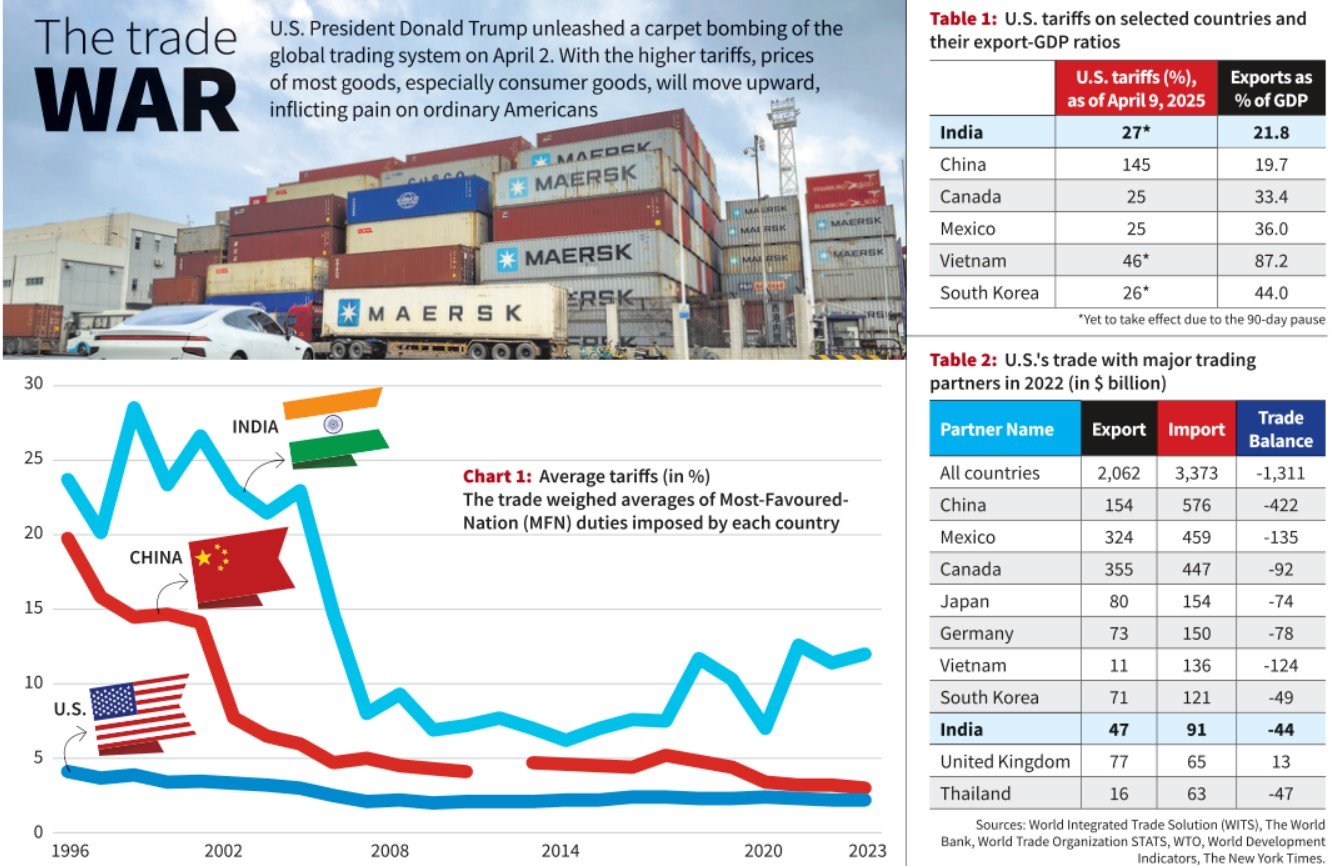
However, the situation is more complex than a single penalty. When layered with other protectionist measures and reciprocal duties that have been floated during trade disputes, Indian goods could theoretically face a cumulative tariff burden approaching 75%. This figure is catastrophic for any competitive export industry.
The driving force behind this policy is twofold. First, it aims to exert maximum pressure on Iran by isolating it economically. By threatening the trading partners of Tehran, the US effectively forces countries to choose sides. Second, it is a move to reinforce dollar supremacy. The administration has explicitly warned BRICS nations (of which India is a key member) against creating alternative payment mechanisms or currencies that bypass the US dollar.
For India, this creates a “damned if you do, damned if you don’t” scenario. Continuing trade with Iran risks losing competitiveness in the US market due to sky-high tariffs. Yet, abandoning Iran entirely disrupts energy security and regional connectivity projects like the Chabahar Port.
How These Sanctions Have Hit India–Iran Trade
Even before the latest threats of a 75% tariff scenario, the chilling effect of US sanctions was evident. The bilateral trade relationship between India and Iran, once robust and thriving, has seen a dramatic decline over the past few years.
Historically, India and Iran shared a deep economic bond. Iran was a primary supplier of crude oil to India, while India exported agricultural produce, textiles, and machinery in return. However, the fear of secondary sanctions has caused Indian banks and insurers to retreat from facilitating these transactions.
The numbers tell a stark story. Bilateral trade has plummeted as India stopped importing Iranian oil to comply with US demands. What remains is a narrower trade corridor focused on specific goods.
- Key Exports: India primarily sends agricultural products such as Basmati rice, tea, sugar, and spices, along with pharmaceuticals and organic chemicals.
- Key Imports: In the absence of oil, imports have shrunk to dry fruits, inorganic chemicals, and minimal quantities of other raw materials.
The breakdown of payment mechanisms has been the most significant hurdle. The rupee-rial arrangement, which once allowed India to pay for oil in rupees that Iran then used to buy Indian goods, has largely dried up as oil reserves depleted. Now, with the threat of punitive tariffs hanging over any nation “doing business” with Tehran, the few remaining channels are clogging up, leaving exporters with unpaid bills and uncertain futures.
Impact on Indian Farmers and Exporters
The diplomatic standoff in Washington or Tehran might seem abstract, but its consequences are immediate and painful for Indian agriculture. The most visible victim of this geopolitical tussle is the Basmati rice industry.
Iran has traditionally been the largest importer of Indian Basmati rice, accounting for a significant chunk of annual exports. For farmers in Punjab, Haryana, and Uttar Pradesh, the Iranian market is a lifeline. However, the fear of US retaliation and the collapse of payment channels have caused massive disruptions.
Disrupted Orders and Payment Delays
Exporters are reporting that millions of dollars are currently stuck. Iranian buyers, unable to access foreign currency or use traditional banking channels due to sanctions, are defaulting on payments. Consequently, Indian exporters have stopped shipping goods. Warehouses are filling up with stock that was meant for the Middle East, leading to an oversupply in the domestic market.
Commodity Price Crashes
Economics 101 dictates that when supply exceeds demand, prices fall. The halt in exports to Iran has caused the domestic price of paddy to crash. Farmers who planted premium varieties with the expectation of export-grade returns are now selling their harvest at significantly lower rates. This loss of income exacerbates rural distress, making it harder for farmers to pay off debts or invest in the next planting season.
The uncertainty is toxic for business confidence. Exporters are reluctant to sign new contracts, fearing that even if they ship the goods, they might never get paid—or worse, their company could be blacklisted by US authorities.
Broader Sectoral Risks for Indian Economy
While agriculture is the most vocal victim, the pain of these tariffs and sanctions extends far beyond the farm. The interconnected nature of trade means that sanctions on one sector often bleed into others.
Pharmaceuticals
India is known as the “pharmacy of the world,” and Iran has been a consistent buyer of generic medicines and active pharmaceutical ingredients (APIs). These goods are theoretically exempt from many sanctions on humanitarian grounds. However, the fear of banking sanctions is so pervasive that financial institutions often refuse to process payments for even legal humanitarian trade. If the US implements blanket 25% tariffs on countries trading with Iran, Indian pharmaceutical companies could face higher barriers entering the US market, which is their most profitable destination.
A Hit to Diversification
For years, India’s trade strategy has focused on diversification—reducing reliance on any single market. By targeting nations that maintain multi-vector foreign policies, US tariffs undermine this strategy. India is effectively being told that it cannot have a diversified portfolio of trading partners if one of those partners is an adversary of the United States.
This compounds the economic stress on India’s manufacturing sector. If Indian goods become 25% to 75% more expensive in the US, American buyers will simply source from Vietnam, Mexico, or Bangladesh. Losing market share in the US is a long-term risk that Indian industries may struggle to recover from.
Foreign Policy Challenges for India
The economic implications are severe, but the diplomatic dilemma is perhaps even more intricate. India has long prided itself on “strategic autonomy”—the ability to make independent foreign policy decisions based on national interest rather than block alignment. The current US trade posture directly challenges this doctrine.
Aligning 100% with US economic policy complicates India’s traditional relationship with Iran. Beyond oil and rice, Iran is a strategic gateway for India. The Chabahar Port, developed with Indian investment, allows India to bypass Pakistan to access markets in Afghanistan and Central Asia. Abandoning ties with Tehran would mean ceding strategic space in the region to China, which has been eager to deepen its influence in Iran.
The dilemma is sharp:
- Prioritise the US: Protecting the $190 billion trade relationship with the US is economically rational. The US is India’s largest trading partner and a key source of technology and investment.
- Maintain Balance: Abandoning Iran weakens India’s regional standing and energy security options for the future.
Historical context matters here. India and Iran have shared civilisational ties for millennia. In modern times, they have cooperated on issues ranging from energy to counter-terrorism. However, evolving geopolitics are straining this bond. As Washington demands total compliance with its sanctions regime, New Delhi finds its room for manoeuvre shrinking.
Domestic Political and Social Fallout
Economic shocks rarely stay contained within ledgers; they spill over into politics. The crisis facing Basmati farmers has become a flashpoint for domestic political debate in India.
Opposition parties and farmer unions have criticised the government for not doing enough to protect agricultural interests from international volatility. The narrative is building that the government is prioritising diplomatic niceties with Washington over the livelihoods of its own farmers.
Public sentiment is increasingly sensitive to farmer distress. After the massive farmer protests of recent years, any policy failure that lowers agricultural income is political dynamite. If prices continue to crash because export markets are closed off, the pressure on the central government to intervene—either through subsidies, minimum support price (MSP) hikes, or diplomatic pushback—will intensify.
Furthermore, the business community is expressing anxiety. Trade bodies are lobbying the commerce ministry to find a workaround. They argue that Indian businesses should not be collateral damage in a fight between the US and Iran. The inability of the government to secure a waiver or a reliable payment mechanism is being viewed by some as a failure of economic diplomacy.
What’s Next: Strategies and Responses
Facing a potential 75% tariff wall and the collapse of a key export market, sitting idle is not an option. India must deploy a mix of diplomatic and economic strategies to weather this storm.
Diplomatic Negotiations
The first line of defence is dialogue. Indian diplomats will likely lobby Washington for specific exemptions. The argument will be that punishing India—a strategic partner in the Indo-Pacific—counteracts the broader goal of countering Chinese influence. If India’s economy is weakened by US tariffs, it becomes a less effective counterweight to Beijing.
Diversification of Markets
Reliance on the Iranian market for Basmati rice has proven dangerous. Exporters are already looking to expand their footprint in other regions.
- Latin America: An untapped market for Indian grains.
- Europe: While regulatory standards are high, it offers stable prices.
- Middle East: Strengthening ties with Saudi Arabia, Iraq, and the UAE to absorb the surplus volume that used to go to Iran.
Alternative Supply Chains
To bypass the banking deadlock, there is talk of revitalising the barter system or using third-country routes, though these come with high compliance risks. More sustainably, India may look to strengthen regional alliances that rely on local currency settlements, insulating trade from dollar-based sanctions—though this is exactly what the new US tariffs aim to punish.
The threat of punitive US tariffs has reshaped the landscape for India. What started as a foreign policy disagreement between Washington and Tehran has morphed into a livelihood crisis for Indian farmers and a strategic headache for New Delhi.
India finds itself squeezed between the rock of American protectionism and the hard place of regional strategic interests. The potential of facing tariffs up to 75% serves as a stark reminder of the vulnerabilities inherent in the global trading system.
For stakeholders—from the paddy fields to the parliament—the path forward requires agility. India must diversify its markets, negotiate hard with its partners, and perhaps most importantly, insulate its domestic economy from the crossfire of great power rivalries.
Is your business affected by changing global trade policies? Subscribe to our newsletter for weekly insights on navigating international sanctions and market volatility.
Leave a Reply