

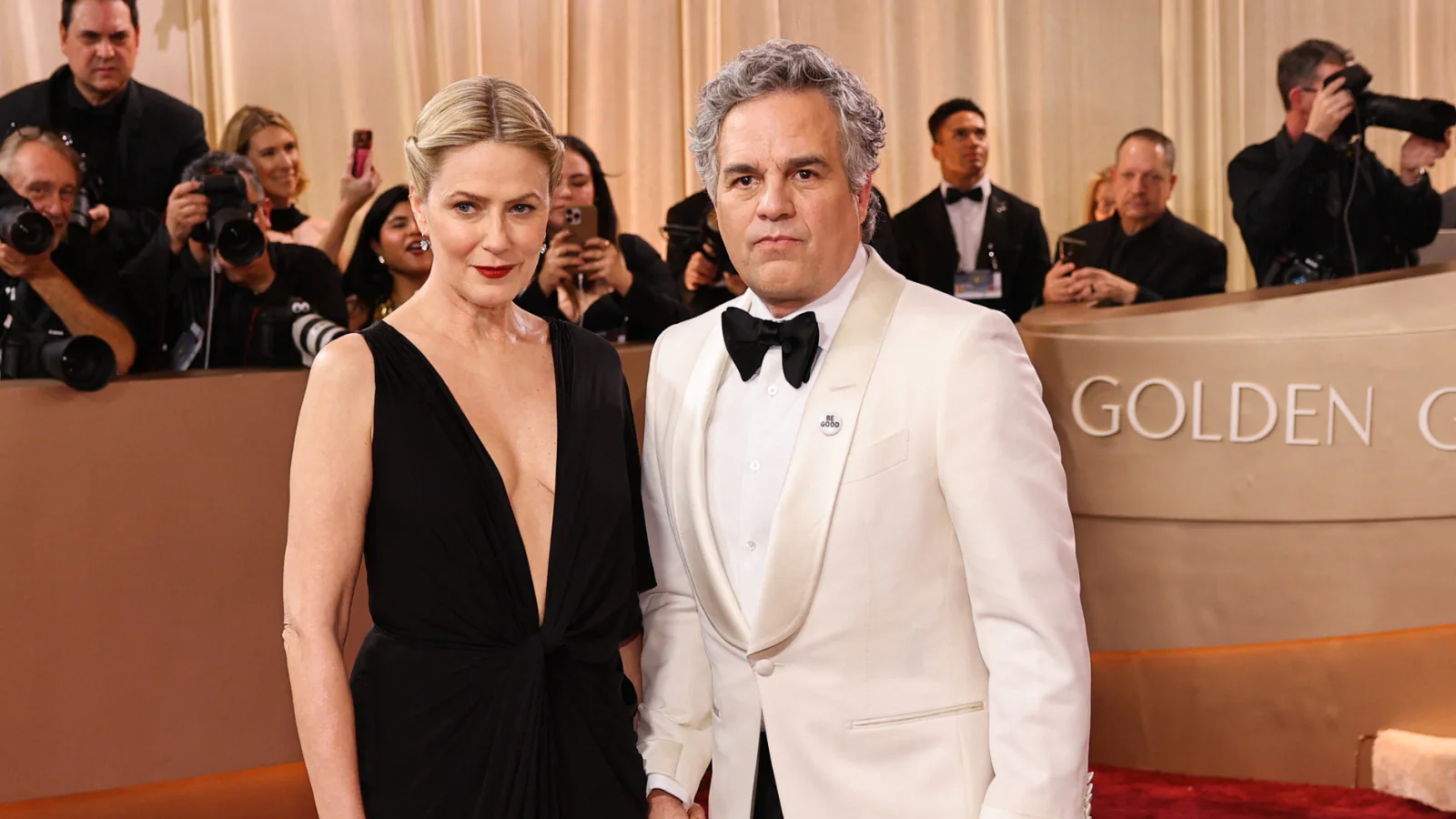
Awards season usually revolves around glitzy gowns, tearful acceptance speeches, and speculation about who will take home an Oscar. Yet, every few years, the red carpet transforms into a political soapbox, sparking debates that ripple far beyond the entertainment industry. The 78th Golden Globe Awards became one such moment, not for a specific film or a snubbed director, but for a pointed clash of ideologies centered on actor Mark Ruffalo and former President Donald Trump.
While Ricky Gervais’s roasting of the Hollywood elite dominated headlines the previous year, this ceremony felt different. It wasn’t about biting comedy; it was about earnest activism during a time of significant social and political upheaval. When Mark Ruffalo accepted his award, he didn’t just thank his agent or his family. He delivered a plea that felt less like a Hollywood acceptance speech and more like a rally cry, aimed implicitly—and at times explicitly—at the divisive political climate epitomised by Donald Trump.
This blog explores exactly what happened that night, dissecting why an awards ceremony turned into a battleground for American politics. We will look at the history of celebrity activism, the specific context of Ruffalo’s comments, and the broader cultural implications of Hollywood stars weighing in on national leadership.
What Mark Ruffalo Said at the Golden Globes
To understand the flashpoint, we must first look at the spark. Mark Ruffalo won the award for Best Actor in a Limited Series for his dual role in I Know This Much Is True. The series itself dealt with heavy themes—mental illness, family trauma, and American tragedy—which perhaps set the stage for a speech that was equally weighty.
Accepting the award via video link (due to pandemic restrictions), Ruffalo appeared with his family, visibly emotional. He began by thanking the usual suspects but quickly pivoted. “We have a dying mother, just like the mother in our show,” he said, referring to Mother Earth. “She is being damaged and destroyed.”
However, the comments that truly ignited the firestorm were centered on the political divide in the United States. He spoke about the need to “turn the page on the cruel past of this nation.” While he did not scream Donald Trump’s name from the rooftops in that specific moment, the subtext was screamingly loud. He urged viewers to fight for inclusion, justice, and care for the planet—themes that stand in direct opposition to the “America First” deregulation policies associated with the Trump administration.
The immediate reaction was electric. Liberal media outlets praised his passion and sincerity, framing him as a conscience for the industry. Conversely, conservative commentators rolled their eyes, dismissing it as another lecture from a wealthy actor disconnected from the “real world.” The speech didn’t just celebrate a performance; it drew a line in the sand.
The Meaning Behind the Protest Symbolism
It wasn’t just words that did the talking. The visual language of the event also played a crucial role in the unfolding narrative. Throughout the ceremony, and specifically during Ruffalo’s appearance, symbolism was front and center.
Many viewers noticed a specific accessory: a pin. Ruffalo, along with several other stars, used their platform to display symbolic support for various causes. In this instance, the “Time’s Up” movement and environmental symbols had often been the norm, but the political urgency of the post-2020 election landscape brought a different flavour to the symbolism.
Ruffalo has historically been associated with the “Be Good” or “Be A Hero” messaging, often tied to climate activism and anti-corporate greed. By bringing these symbols into a mainstream awards broadcast, the intent was to bypass the soundbite filter of the news and communicate directly with the audience.
Symbolism matters on the red carpet (or the Zoom screen) because it is a silent protest that cannot be edited out. A speech can be cut short by the orchestra playing the winner off stage, but a pin or a specific choice of attire remains visible throughout the segment. It signaled to the audience that for these actors, their art is inextricable from their activism.
Why Donald Trump Was the Target
Why was Mark Ruffalo the one to ignite this specific firestorm? Put simply, Ruffalo has never been shy about his disdain for Donald Trump’s politics. Long before the Golden Globes, the Avengers star was a vocal critic on Twitter (now X) and in interviews, often labeling Trump as “public enemy number one” regarding climate change and social justice.
Ruffalo’s criticism is rarely superficial; he attacks specific policies. He has consistently campaigned against fracking, pipeline construction, and corporate deregulation—all pillars of the Trump administration’s economic policy. Therefore, when he speaks about “cruelty” or a “dying mother,” he is directly referencing the environmental rollbacks that occurred between 2016 and 2020.
Donald Trump remains a lightning rod in pop culture because he represents the antithesis of the Hollywood ethos. Where Hollywood generally preaches globalisation, diversity, and artistic expression, Trump’s brand is built on nationalism, strict borders, and a populist rejection of “cultural elites.” Ruffalo, as a prominent figure in that elite circle who also spends significant time in grassroots activism, becomes the perfect foil. The conflict isn’t just personal; it is a clash of two diametrically opposed visions for America’s future.
Hollywood and Political Speech at Award Shows
The Golden Globes incident was not an anomaly; it was part of a long tradition. The intersection of Hollywood and politics dates back decades. Marlon Brando famously sent Sacheen Littlefeather to refuse his Oscar for The Godfather in protest of the treatment of Native Americans. Vanessa Redgrave was booed for her “Zionist hoodlums” speech in 1978.
Celebrities use these platforms because the reach is unparalleled. A tweet might reach millions, but an awards speech reaches a captive, global audience. For activists like Ruffalo, the trade-off is worth it: risking alienation from some fans to highlight an issue they believe is existential.
However, the reception of these speeches has shifted. In the 1970s or 90s, a political speech might be seen as a shocking, singular event. Today, audiences almost expect it. This expectation creates a divide. Supporters view these moments as brave uses of privilege to speak truth to power. Critics, particularly those on the right, view it as narcissistic moralising. They argue that people tune in to be entertained, not lectured, and that Hollywood bubbles are impervious to the economic realities of the average voter.
Public and Political Reaction
The aftermath of Ruffalo’s speech followed a predictable but intense trajectory on social media. Twitter exploded with the hashtag #GoldenGlobes, but the conversation quickly split into two distinct echo chambers.
On one side, Ruffalo was hailed as a hero. Fans shared clips of the speech, captioning them with praise for his vulnerability and his willingness to speak about climate change on such a massive stage. Fellow celebrities retweeted him, reinforcing the industry’s general consensus against Trumpian politics.
On the flip side, the backlash was swift and vitriolic. Conservative pundits seized on the speech as evidence of Hollywood’s “woke” agenda. Comments sections were filled with viewers vowing to boycott future films or awards shows. The criticism often focused on the perceived hypocrisy of a wealthy actor preaching about equality and environmentalism while participating in an industry known for excess and private jets.
This binary reaction highlights the impossibility of “unifying” speeches in the current climate. What is intended as a call for healing (Ruffalo’s plea to “turn the page”) is interpreted by the opposition as a condescending attack.
Media Coverage and Culture-War Framing
The way the media covered the Ruffalo vs Trump narrative was arguably as important as the event itself. Entertainment news outlets like Variety or The Hollywood Reporter focused on the emotional weight of the speech and its connection to the themes of his winning show.
However, political news outlets framed it through the lens of the culture war. Fox News and similar platforms focused on the “anti-Trump” sentiment, using it to stoke the grievance politics that drive engagement. Conversely, MSNBC or CNN might frame it as a necessary rebuke of a controversial presidency.
The role of outrage cannot be overstated here. In the digital economy, outrage drives clicks. A headline that reads “Mark Ruffalo Gives Nice Speech” gets nowhere near the traffic of “Mark Ruffalo Slams Trump in Golden Globes Rant.” The media incentive structure encourages the amplification of conflict, turning a heartfelt plea into a political weapon.
Does Celebrity Activism Still Move the Needle?
The million-dollar question remains: does any of this actually change minds? When Mark Ruffalo speaks, does a Trump voter change their ballot? Does a non-voter suddenly decide to register?
Political scientists and sociologists are divided. Some studies suggest that while celebrity endorsements can increase voter enthusiasm and fundraising, they rarely change a person’s fundamental political alignment. In fact, for some voters, a celebrity endorsement can have a negative effect—if they dislike the celebrity, they might be pushed further in the opposite direction.
There is also the issue of “activism fatigue.” With every awards show turning into a political rally, audiences may become desensitised. The shock value of a Brando-style protest is gone. When everyone is an activist, the impact of individual statements is diluted.
However, Ruffalo fits into a slightly different category than the average star. Because his activism is year-round and involves on-the-ground work (not just tweets), he carries more credibility with progressives. His comments may not convert the opposition, but they serve to energise the base, reminding dispirited liberals that they have allies in high places.
Why This Moment Became a Flashpoint
This specific clash between Ruffalo and the spectre of Trump became a flashpoint because it sat at the perfect intersection of entertainment, politics, and identity. It happened at a time when the United States was incredibly fragile—post-election, pre-inauguration, and in the midst of a pandemic. Nerves were frayed.
The Golden Globes, usually a chaotic and boozy party, became a sombre reflection of the national mood. Ruffalo’s speech resonated (or revolted) because it touched on the rawest nerve of the era: the definition of American decency.
For his supporters, Ruffalo represented empathy, science, and kindness—traits they felt were missing from the White House. For his detractors, he represented elitism, performance, and condescension—traits they felt defined the liberal establishment. The moment was amplified because it wasn’t really about an actor and a politician; it was about two warring versions of reality.
The Legacy of the Speech
Ultimately, the Mark Ruffalo vs Donald Trump narrative at the Golden Globes serves as a microcosm of modern American discourse. It reveals that there is no longer a “neutral” space in culture. Even an awards ceremony for television and film is now a battleground for the soul of the nation.
While the headlines fade, the underlying tensions remain. Hollywood will continue to speak out, and a significant portion of the country will continue to tune them out. But for a brief moment, a speech about a “dying mother” and a “cruel past” forced millions of viewers to confront the political reality outside their living rooms.
If you are interested in learning more about the intersection of pop culture and politics, or want to stay updated on the latest industry insights, subscribe to our newsletter today for weekly analysis and deep dives.
Leave a Reply