

In the unpredictable world of Indian cinema, budget numbers often dominate the conversation before a single frame is released. We talk about Rs 1000 crore collections, massive VFX expenditures, and star salaries that rival GDPs of small nations. Yet, even in this climate of excess, a specific number has recently sent ripples through trade circles and fan forums alike: ₹350 crore.
This is the reported budget for The Raja Saab, an upcoming project that is being marketed—at least on the surface—as a horror film.
For context, Indian horror has historically been a genre of modest means. From the Ramsay Brothers’ cult classics to the sleek, atmospheric thrillers of the 2000s, fear was usually manufactured on a budget. Jump scares, after all, are cheaper than explosions. But The Raja Saab is defying that logic entirely. It isn’t just trying to scare you; it’s trying to overwhelm you with scale.
This massive investment signals that the producers aren’t just making a genre film; they are conducting a high-stakes experiment. They are betting that the Indian audience is ready for a horror-comedy-fantasy hybrid mounted on the scale of an Avengers movie. But what makes this project different from the typical scares we’re used to? And can a genre film actually recover such a colossal investment?
The ₹350 Crore Budget – Breaking Down the Risk
When a studio greenlights a budget of ₹350 crore (approximately $42 million USD), they aren’t looking for a niche hit. They need a cultural phenomenon. To understand the magnitude of this gamble, we have to look at where the money is likely going.
Where the Money Goes
Unlike a drama where costs are driven by talent fees and locations, a project like The Raja Saab has different financial thirsty points.
- Visual Effects (VFX): Reports suggest a significant portion of the budget is allocated to CGI. This implies that the horror elements won’t just be practical makeup or dark lighting; we are likely looking at large-scale supernatural entities, fantastical environments, or de-aging technology.
- Scale and Sets: To justify a “Pan-India” label, the film requires a visual grandeur that competes with global cinema. Grandiose palace sets, period-specific art design, and massive crowd sequences eat into the budget rapidly.
- Marketing: A film of this size requires a deafening marketing blitz. Promotional tours, global premieres, and digital dominance are expensive but necessary to ensure opening day occupancy.
The Horror Context
Comparing this to recent Indian horror hits highlights the disparity. Films like Stree, Bhool Bhulaiyaa 2, or even the visually impressive Tumbbad were made for a fraction of this cost. They relied on script, atmosphere, and performance. The Raja Saab is entering unchartered waters where it must deliver the intimacy of horror with the spectacle of an action blockbuster.
Producers are betting big because the lines between genres are blurring. Audiences are no longer satisfied with simple genres; they want “event” films. The calculation is that a massive budget allows for a theatrical experience that streaming platforms cannot replicate.
The Raja Saab – Plot, Genre, and Vision
While specific plot details are kept under tight wraps, the promotional material suggests that The Raja Saab is not a haunted house story. It is shaping up to be a genre-bending saga.
Horror Meets Fantasy and Mass Entertainment
The film appears to be fusing horror with high fantasy and mass masala elements. This is a tricky cocktail. Lean too hard into horror, and you alienate family audiences. Lean too hard into comedy or action, and the stakes feel low. The creators seem to be aiming for the “horror-comedy” sweet spot but scaling it up to epic proportions. Think less Paranormal Activity and more Pirates of the Caribbean—supernatural elements used to drive a massive adventure.
Story Premise and World-Building Ambitions
Rumors hint at a storyline involving reincarnation, ancient curses, and a royal lineage (hence the title). This necessitates world-building. The film likely spans different timelines or creates a fictional universe with its own rules of magic and logic. This ambition to create a “universe” rather than just a story is what drives the budget up, as every prop and background detail must serve the mythology.
Balancing Fear, Spectacle, and Commercial Appeal
The biggest challenge for the script is tonal balance. A ₹350 crore film cannot be rated ‘A’ (Adults Only) if it wants to be profitable. It needs to be accessible to families. This means the horror elements might be more atmospheric or fantasy-based rather than gory or disturbing. The “fear” factor must be balanced with the “wow” factor of the spectacle.
Star Power and Casting Strategy
You don’t spend ₹350 crore without an insurance policy, and in Indian cinema, that policy is usually a superstar. Enter Prabhas.
The Prabhas Factor
Since Baahubali, Prabhas has transcended regional boundaries to become a true Pan-Indian star. His presence guarantees an opening. His involvement is the primary reason this budget exists. A Prabhas film brings in the mass centers of Telugu states, a significant chunk of the Hindi belt, and a growing overseas market. His box office pull allows producers to pre-sell rights at exorbitant rates, mitigating some of the risk before the film even releases.
Character-Driven Horror
However, casting a superstar in a horror film is unusual. Superstars usually play invincible heroes; horror requires vulnerability. It will be fascinating to see how the script handles this. Does the “Rebel Star” get scared? Or does he beat up the ghosts? The casting of the supporting actors—likely a mix of comedy veterans and dramatic heavyweights—suggests an ensemble approach to keep the energy high even when the scares aren’t happening.
Director’s Vision and Creative Intent
Director Maruthi is known for his entertaining, often comedic style. Handing him the reins of a VFX-heavy, massive budget epic is an interesting choice. It suggests that the producers value “entertainment factor” over gritty realism.
Interviews and press releases have hinted that Maruthi is looking to reinvent his image and the genre. He isn’t trying to make a dark, brooding film. He is aiming for a “festival entertainer.” The vision seems to be a film that feels like a celebration—colorful, loud, and vibrant—that just happens to feature ghosts. This aligns with the “event film” positioning. It’s not designed to be watched alone in the dark; it’s designed to be watched in a packed theater with popcorn.
VFX, Technology, and Production Design
If the teaser assets are anything to go by, The Raja Saab is leaning heavily on digital artistry.
CGI vs. Practical Effects
In modern Indian horror, bad CGI is often the death knell of immersion. If the ghost looks like a cartoon, the fear evaporates. With a budget of this size, the expectation is international-quality VFX. The industry will be watching closely to see if the money is visible on screen. Are the creatures terrifying? Is the magic seamless?
Visual Ambition and Set Design
Production design will play a crucial role in grounding the fantasy. Grand palaces that look lived-in, costumes that reflect a specific era or royal lineage, and lighting that shifts mood instantly are all critical. The film aims to set a benchmark for what Indian horror-fantasy looks like. If successful, it could push the industry away from the “creaky door in an old mansion” trope toward more imaginative, fantastical settings.
Why The Raja Saab Is More Than “Just Horror”
To recover ₹350 crore, you cannot just be a horror movie. You have to be a myth.
The film appears to be tapping into deeper cultural layers. India has a rich tradition of folklore, Yakshas, and local legends that haven’t been fully explored in high-budget cinema. By weaving these elements into the narrative, The Raja Saab elevates itself from a simple scare-fest to a cultural story.
Furthermore, the emotional arcs—likely centering on romance, betrayal, or family honor—provide the “mass appeal.” In India, a film is rarely just one thing. It is a ‘Thali’ meal—a little bit of everything. The Raja Saab promises action sequences for the adrenaline junkies, romance for the couples, comedy for the families, and horror for the thrill-seekers.
Box Office Math: What Does Success Look Like?
The economics of this film are daunting.
Break-Even Analysis
Generally, for a film to be considered a hit theatrically, it needs to earn a distributor share that covers the rights purchased. For a ₹350 crore budget, the gross box office likely needs to cross ₹600-700 crore worldwide to be declared a clean hit, depending on how the pre-release business is structured.
Revenue Streams
- Theatrical: The domestic market (Andhra/Telangana) will provide the base, but the Hindi and overseas markets are the profit multipliers.
- Non-Theatrical: This is the safety net. Satellite rights (TV broadcast) and OTT (streaming) rights for a Prabhas starrer are astronomical. Music rights also contribute significantly. It is entirely possible that 60-70% of the budget is recovered through these non-theatrical avenues before release.
Audience Expectations and Social Media Buzz
The internet is already divided.
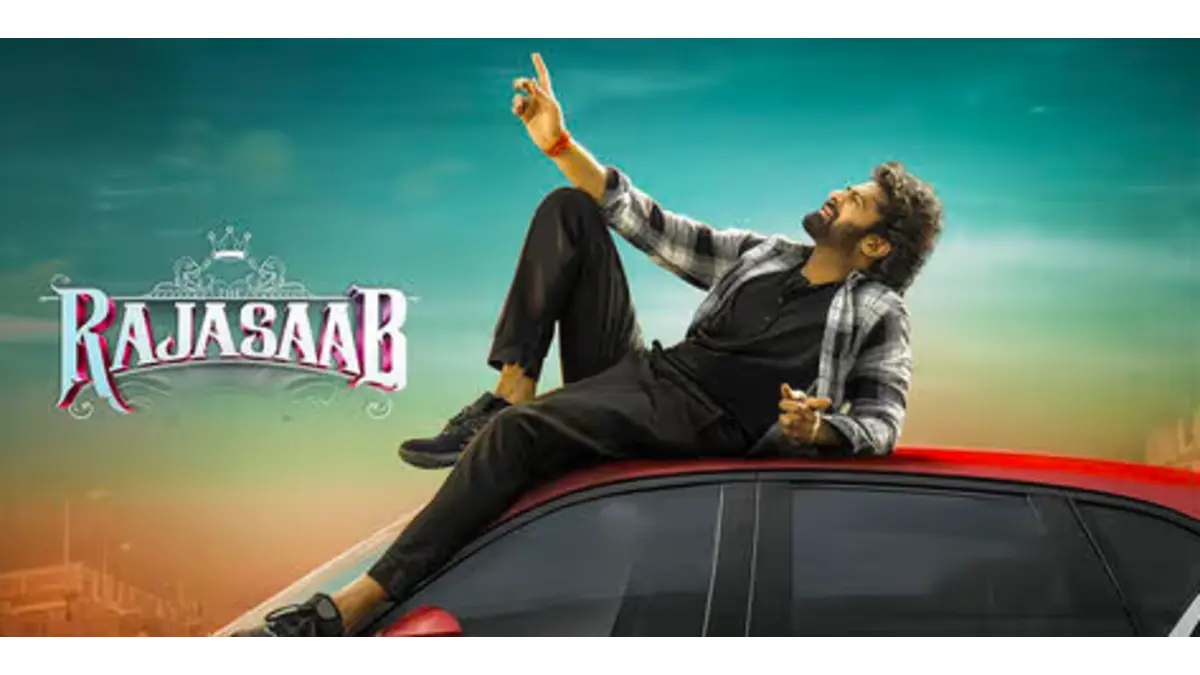
Fan reactions to the colorful, almost retro posters have been mixed. Some love the vibrancy; others worry it looks too “light” for a horror film. The debate around the budget is also fierce. Is it inflated for marketing, or is it real?
Meme culture plays a massive role in modern film marketing. A single funny expression or a catchy song snippet can make or break awareness. The “vintage” look of Prabhas released in promotional material has sparked curiosity. Is he playing an older character? A ghost? The speculation drives the hype cycle, keeping the film relevant months before release.
Can The Raja Saab Redefine Horror in Indian Cinema?
This is the ultimate question. If The Raja Saab succeeds, it opens the floodgates.
It would prove that horror isn’t just a low-budget, high-ROI genre, but a playground for blockbusters. We could see a wave of high-budget folklore adaptations, creature features, and fantasy-horror epics.
However, the risk of failure is just as significant. A high-profile flop could spook investors, sending the horror genre back to the realm of low-budget experiments for another decade. It serves as a lesson for filmmakers: scale is great, but content is king. A ₹350 crore budget can buy great visuals, but it cannot buy audience emotional investment.
A High-Risk, High-Reward Experiment
The Raja Saab represents ambition over convention. It is an attempt to stretch the boundaries of what a superstar film can be and what a horror film can look like. The cultural and commercial stakes are incredibly high, not just for the producers, but for the industry’s perception of genre films.
Will the gamble pay off? Will audiences accept a horror movie that costs as much as an action epic? The answer lies in the execution. If the film delivers on its promise of a visual spectacle grounded in a compelling story, the ₹350 crore tag will be a badge of honor. If not, it will be a cautionary tale.
Regardless of the outcome, The Raja Saab has already achieved one thing: it has forced us to look at Indian horror with a wider, more ambitious lens.
Are you ready for the Raja Saab experience?
Don’t miss the latest updates on this cinematic spectacle. Subscribe to our newsletter for exclusive industry insights and box office analysis and stay ahead of the curve.
Leave a Reply