

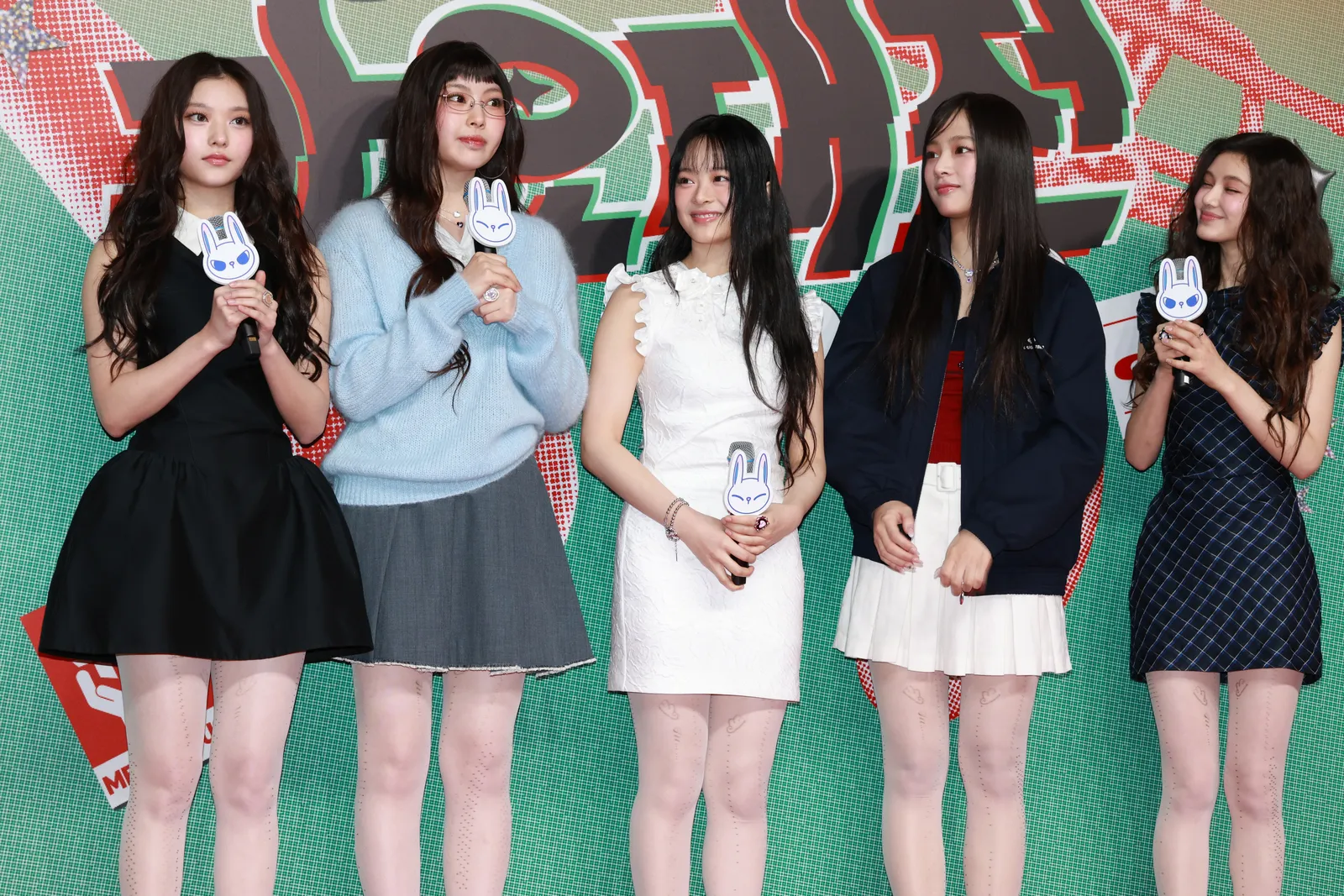
Since their debut in 2022, NewJeans has represented a breath of fresh air in the K-pop industry. With their nostalgic Y2K aesthetic, easy-listening R&B tracks, and “girl next door” charm, they rapidly ascended to the top of global charts. They were the perfect success story—a harmonious blend of creative vision and corporate backing.
However, that image of harmony shattered in April 2024. The industry was rocked by an unprecedented public feud between HYBE, the multi-billion dollar entertainment giant, and ADOR, its subsidiary label led by the visionary CEO Min Hee-jin. What started as an internal audit quickly spiraled into a saga of accusations, emotional press conferences, court injunctions, and an uncertain future for one of the world’s most popular girl groups.
This dispute is not merely tabloid fodder; it exposes deep fractures in the modern K-pop business model. It raises questions about creative ownership, the efficacy of the multi-label system, and how much power artists actually hold. For fans and industry insiders alike, understanding the timeline of this conflict is essential to predicting the future of NewJeans.
Who Are NewJeans and ADOR?
To understand the gravity of the dispute, one must first understand the unique structure that created NewJeans.
The Rise of a Global Phenomenon
NewJeans—comprising Minji, Hanni, Danielle, Haerin, and Hyein—debuted with a strategy that defied K-pop norms. There were no teasers, no concept photos, and very little pre-promotion. They simply dropped the music video for “Attention,” and the world listened. Their success was instantaneous, largely credited to the distinct creative direction that set them apart from the maximalist, high-octane “girl crush” concepts dominating the market.
ADOR: A Label Within a Giant
The group is managed by ADOR (All Doors One Room), a sub-label under HYBE Corporation. HYBE is best known as the home of BTS, but in recent years, it has acquired or created several independent labels (like PLEDIS, Source Music, and BigHit Music) to diversify its portfolio.
ADOR was unique because it was founded specifically for Min Hee-jin. Min is a legendary figure in K-pop, formerly a creative director at SM Entertainment where she shaped the visual identities of groups like SHINee, f(x), and Red Velvet. HYBE recruited her with the promise of full creative autonomy. While HYBE owns 80% of ADOR, Min Hee-jin held the remaining 20% (later reduced to 18%) and served as CEO. This relationship was supposed to be the perfect marriage of HYBE’s capital and infrastructure with Min’s creative genius.
Early Signs of Tension
While the public saw chart-topping hits and luxury brand endorsements, fissures were forming behind closed doors long before the news broke in 2024.
The ILLIT Controversy
Tensions reportedly escalated with the debut of ILLIT, a new girl group from BELIFT LAB (another HYBE sub-label). Observers and fans immediately noticed stylistic similarities between ILLIT and NewJeans—from the choreography and styling to the musical production.
Min Hee-jin later revealed that she had raised internal complaints about this, accusing HYBE of “copying” her cultural formula. She argued that HYBE was cannibalizing its own success by allowing one sub-label to replicate the distinct intellectual property of another.
Contract Negotiations
Simultaneously, negotiations regarding shareholder agreements were souring. Reports suggest there were disagreements over “put options” (the right to sell shares back to the company at a specific price) and the terms of non-compete clauses. These financial and legal disagreements set the stage for the explosive conflict that followed.
Key Events in the NewJeans vs ADOR Timeline
The dispute moved from the boardroom to the headlines with blinding speed. Here is the chronological breakdown of the major events.
April 2024: The Audit Begins
On April 22, HYBE initiated a surprise audit of ADOR’s management. They accused Min Hee-jin and her deputies of plotting to seize full control of the sub-label and break away from the parent company. HYBE seized computer assets and demanded Min’s resignation.
HYBE leaked documents alleging that Min had consulted with outside investors and legal experts to find ways to pressure HYBE into selling its stake in ADOR. They claimed she was gathering “dirt” on HYBE artists to use as leverage.
The “Green Sweater” Press Conference
On April 25, Min Hee-jin held an emergency press conference that instantly became a cultural moment. Wearing a green sweater and a baseball cap, she spoke emotionally and candidly for over two hours. She denied all accusations of a corporate coup, calling them delusional.
Instead, she framed the narrative around creative integrity. She publicly accused HYBE of mismanagement and criticized the debut of ILLIT as a “NewJeans copycat.” She shared private text messages and claimed that HYBE chairman Bang Si-hyuk had ignored NewJeans’ success. Public sentiment, initially skeptical of her, swung significantly in her favor following this raw display of frustration.
May 2024: The Court Injunction
HYBE attempted to fire Min Hee-jin through a shareholder meeting. However, Min filed for an injunction to stop them from exercising their voting rights to remove her.
In late May, the Seoul Central District Court ruled in Min’s favor. The court stated that while Min may have sought independence for ADOR, she had not taken specific actions to damage the company (breach of trust). This was a massive legal blow to HYBE, forcing them to keep her as CEO for the time being, though they managed to fire two of her close allies from the ADOR board.
The “NewJeans Never Die” Petition
During the court battle, the members of NewJeans and their parents submitted petitions to the court. While the contents were not fully public, it was widely understood that the members sided with Min Hee-jin, referring to her as “Mother” and viewing her creative leadership as essential to their identity.
August 2024: The Dismissal
Despite the injunction, the truce was temporary. In late August, the ADOR board (now populated by HYBE appointees) voted to remove Min Hee-jin as CEO. They offered to let her stay on as the producer for NewJeans, but stripped her of executive power. Kim Ju-young, a HYBE HR executive, was appointed as the new CEO. Min rejected this arrangement, citing toxic clauses in the production contract offered to her.
September 2024: The YouTube Livestream
On September 11, the five members of NewJeans took matters into their own hands. They opened a clandestine YouTube channel and held a livestream without management’s permission.
In the video, they expressed their fear and frustration. They detailed mistreatment within the company, including an allegation that a manager from another HYBE group told members to “ignore” Hanni in the hallways. Most critically, they issued an ultimatum: they demanded Min Hee-jin be reinstated as CEO by September 25, restoring ADOR to its “original state.”
Legal and Contractual Issues Explained
This dispute is complex because it blends corporate law with entertainment industry norms.
The “Usurping Management Rights” Accusation
HYBE’s primary argument was that Min Hee-jin violated her fiduciary duty. In corporate law, an executive cannot plot against the interests of the company that owns them. HYBE argued that seeking outside investment to dilute HYBE’s ownership constituted a betrayal. Min’s defense was that these were merely “complaints” and “venting” about mistreatment, never actionable plans.
The Standard Exclusive Contract
In K-pop, artists are bound by exclusive contracts that are notoriously difficult to break. If NewJeans were to try and leave HYBE, they would likely face penalty fees (termination fees) amounting to hundreds of millions of dollars. These fees are usually calculated based on the artist’s average monthly projected revenue multiplied by the remaining months of the contract.
The “Breach of Trust” Angle
For NewJeans to leave without paying these penalties, they would have to prove that HYBE/ADOR breached the contract first. This is why the allegations of mistreatment (the “ignore her” incident) and the failure to support their activities are legally significant. They are building a case that the agency failed in its duty to protect and support the artists.
HYBE’s Role in the Controversy
As the parent company, HYBE has faced intense scrutiny regarding its management style.
The Multi-Label System Under Fire
HYBE prides itself on a multi-label system intended to encourage independence. However, this dispute highlighted the system’s flaws. Critics argue that HYBE created internal competition that turned toxic. By allowing overlapping concepts and release schedules, the sub-labels began fighting for resources and market share rather than cooperating.
Corporate Reputation
The dispute has impacted HYBE’s stock price and reputation. Investors worry about the stability of the company’s biggest assets. Furthermore, the public relations battle has painted HYBE as a cold, corporate monolith bullying a creative female executive and young artists, a narrative that has proven damaging in the court of public opinion.
Fan Reactions and Industry Impact
The reaction from the “Bunnies” (NewJeans’ fandom) and the wider K-pop community has been fierce.
A Fandom United
Fans have organized protest trucks, hashtags, and boycotts. The prevailing sentiment is protective. Fans argue that NewJeans is being treated as collateral damage in a corporate ego war. The revelation that the members felt unsafe or disregarded at their workplace sparked outrage.
Brand Dilemmas
NewJeans members are ambassadors for major luxury houses like Chanel, Gucci, Dior, and Louis Vuitton. While brands have largely remained silent, prolonged instability puts these lucrative contracts at risk. Brands prefer stability, and a group on the verge of a lawsuit is a risky investment.
A Precedent for Idol Rights
The livestream by NewJeans was a rare act of rebellion. It is uncommon for K-pop idols to publicly challenge their agency while still under contract. If NewJeans succeeds in forcing HYBE’s hand, it could empower other artists to demand better treatment and more say in their management.
What Happens Next for NewJeans?
The deadline given by NewJeans (September 25) passed with HYBE rejecting the demand to reinstate Min Hee-jin as CEO. This leaves the group in a precarious position.
Possible Outcomes
- Legal Battle for Termination: The group may file for an injunction to suspend their exclusive contracts. This would lead to a long, ugly court battle similar to the one experienced by the members of TVXQ or Fifty Fifty.
- The “Dungeon”: If the group stays but refuses to cooperate with new management, HYBE could arguably place them on an indefinite hiatus—often referred to as being put in the “dungeon.” However, this would be financial suicide for the company given the group’s earning potential.
- Compromise: A settlement where Min Hee-jin retains creative control as an external producer, while HYBE retains management rights. However, trust appears to be completely broken, making this unlikely.
The Future of Their Music
Currently, the group’s future activities are in limbo. Fan meetings and album preparations have reportedly been stalled. The fear is that the “NewJeans sound” and brand, heavily curated by Min Hee-jin, will deteriorate under different leadership.
The Future of K-Pop Governance
The NewJeans vs. ADOR saga is more than just celebrity drama; it is a stress test for the K-pop industry’s rapid expansion. It highlights the friction between the creative minds that build cultural phenomena and the corporate structures required to scale them.
Regardless of the legal outcome, the illusion of the perfect K-pop family has been shattered. The industry is watching closely, knowing that the resolution of this conflict will rewrite the rules of artist-label relationships for years to come. Whether NewJeans can survive this storm remains the biggest question in global pop music today.
FAQ Section
What is the NewJeans vs ADOR dispute about?
The dispute began as a conflict between HYBE (the parent company) and Min Hee-jin (then-CEO of ADOR). HYBE accused Min of attempting to take ADOR independent. Min accused HYBE of mismanagement and plagiarizing NewJeans’ concept for another group. It has since evolved into a battle over the treatment and future of the group NewJeans.
Is HYBE involved in the conflict?
Yes, HYBE is the parent corporation that owns 80% of ADOR. They initiated the audit against Min Hee-jin and have since appointed a new CEO and board of directors for ADOR.
Are NewJeans activities affected by the dispute?
Yes. While they have fulfilled existing obligations, members have expressed uncertainty about their future work. Delays in album production and fan events have been reported as the internal management structure shifts.
Has there been legal action taken?
Yes. There have been audits, police reports filed for breach of trust, defamation suits, and court injunctions regarding voting rights. It is highly likely that further litigation regarding the artists’ contracts will occur.
How does this impact the K-pop industry overall?
This dispute exposes flaws in the “multi-label” system used by major entertainment companies. It also sets a potential precedent for how much autonomy creative directors and artists can demand from their parent corporations.
Leave a Reply